If you own a 2005 Honda CR-V and you're due for new tires, you've probably narrowed your search to Bridgestone and Michelin. Both are premium tire brands with strong reputations, but they don't perform the same way on this specific vehicle. The 2005 CR-V came with 215/65R16 tires from the factory, and picking the right brand in that exact size affects your ride comfort, fuel economy, wet traction, and how long the tires last before you need to replace them. Getting this choice right means fewer headaches and better value over the life of the tires.
What Tire Size Does the 2005 Honda CR-V Actually Use?
The factory-specified tire size for the 2005 Honda CR-V is 215/65R16. This means the tire is 215 millimeters wide, has a sidewall height that's 65% of the width, and fits a 16-inch rim. You might see slight variations listed as 215/65R16 96T or 215/65R16 98T depending on the load index and speed rating. Honda recommended a tire pressure of around 30-32 PSI for normal driving conditions.
Sticking with this original size matters. Putting on a different size can throw off your speedometer, affect the ABS system, and change how the all-wheel-drive system handles. If you want a deeper breakdown of how OEM tire sizes compare across brands, we covered that in our Honda CR-V OEM tire size and all-season brand ratings article.
Which Bridgestone Tires Fit the 2005 CR-V?
Bridgestone offers a couple of solid options in the 215/65R16 size that work well on the CR-V:
Bridgestone Dueler H/L Alenza Plus
This is a highway all-season tire designed for crossovers and small SUVs. It focuses on long tread life and a quiet ride. Bridgestone backs it with up to an 80,000-mile treadwear warranty, which is generous for this class. The Alenza Plus handles dry roads well and gives a smooth, comfortable ride. Wet grip is decent but not class-leading. In light snow, it performs adequately, but it's not a winter tire by any means.
Bridgestone Ecopia H/L 422 Plus
The Ecopia line targets fuel efficiency. Bridgestone uses a low-rolling-resistance compound to squeeze out slightly better gas mileage. On a 2005 CR-V that already gets modest fuel economy, every bit helps. Tread life is rated for up to 70,000 miles. The tradeoff is that the Ecopia can feel a bit firmer over bumps and may sacrifice some grip in heavy rain compared to the Alenza Plus.
Which Michelin Tires Fit the 2005 CR-V?
Michelin also has strong contenders in the 215/65R16 size:
Michelin Defender LTX M/S
This is Michelin's go-to tire for SUVs and crossovers that spend most of their time on pavement. The Defender LTX M/S is known for excellent wet braking, long tread life (up to 70,000 miles), and a comfortable highway ride. It handles light snow better than most all-season options. Road noise is low. The main downside is price it's typically the most expensive option in this comparison.
Michelin Latitude Tour HP
The Latitude Tour HP leans more toward a touring feel. It offers precise steering response and good dry grip. Tread life is a bit shorter than the Defender LTX, usually around 55,000-65,000 miles. It's a good pick if you value handling feel over maximum longevity.
How Do Bridgestone and Michelin Compare Head-to-Head on the 2005 CR-V?
Here's what matters most when comparing these brands on this specific vehicle:
Ride Comfort
Both brands deliver a comfortable ride in the 215/65R16 size. The Michelin Defender LTX M/S tends to absorb road imperfections a bit more smoothly. The Bridgestone Alenza Plus is close behind but can transmit slightly more road texture into the cabin. On rough roads or pothole-heavy streets, Michelin has a small edge.
Wet Traction
Michelin consistently scores higher in wet braking tests conducted by independent reviewers like Tire Rack and Consumer Reports. The Defender LTX M/S uses Michelin's EverGrip technology, which maintains wet grip even as the tire wears down. Bridgestone's Alenza Plus performs well in moderate rain but doesn't match Michelin's stopping distances on soaked roads.
Tread Life
Bridgestone often wins on treadwear warranty numbers. The Alenza Plus at 80,000 miles beats the Defender LTX M/S at 70,000 miles on paper. In real-world driving, both tend to come closer together. Expect roughly 55,000-65,000 actual miles from either tire on a CR-V, depending on driving habits, rotation schedule, and road conditions. If you want to see how Goodyear's stock tires held up long-term on this same vehicle, check out our long-term performance review of Goodyear tires on the 2005 CR-V.
Fuel Economy
The Bridgestone Ecopia H/L 422 Plus has the best fuel economy rating in this comparison thanks to its low-rolling-resistance design. You might see a 1-2 MPG improvement over standard all-season tires. The Michelin Defender LTX M/S also uses low-rolling-resistance compounds but prioritizes grip over maximum efficiency. The difference between the two is small maybe half a mile per gallon but it adds up over years of driving.
Price
Michelin tires cost more. Expect to pay $140-$170 per tire for the Defender LTX M/S in 215/65R16. Bridgestone's Alenza Plus typically runs $110-$140 per tire. The Ecopia H/L 422 Plus usually falls in the $100-$130 range. Over a set of four tires, you're looking at a $120-$200 difference between Bridgestone and Michelin. For a full brand-by-brand price breakdown, our factory tire size comparison by brand covers more options.
What Common Mistakes Do People Make When Choosing Between These Brands?
- Buying based on brand name alone. Both Bridgestone and Michelin make excellent tires, but specific models within each brand perform differently. The cheapest Michelin isn't always better than a mid-range Bridgestone.
- Ignoring the load index and speed rating. Make sure any tire you buy matches or exceeds the original 96T or 98T rating. Undersized load ratings can be unsafe, especially if you carry passengers or cargo regularly.
- Skipping tire rotation. Both Bridgestone and Michelin tires last longer with regular rotation every 5,000-7,500 miles. Uneven wear shortens tire life significantly on the CR-V's all-wheel-drive system.
- Over-inflating for better fuel economy. Stick to Honda's recommended 30-32 PSI. Over-inflation reduces the contact patch and makes the ride harsher without meaningful fuel savings.
- Not checking the manufacture date. Tires older than 5-6 years even if they're "new" can have hardened rubber that compromises grip. Look for the DOT code on the sidewall.
What Do Real-World CR-V Owners Say?
Owner forums and reviews paint a consistent picture. CR-V owners who switched from the original Goodyear tires to the Michelin Defender LTX M/S almost always report a quieter ride and better rain handling. Owners who chose the Bridgestone Alenza Plus frequently praise the tread life and lower price point. A smaller group prefers the Ecopia for the fuel savings, especially those with longer commutes.
The most common complaint about Michelin on the CR-V is the higher upfront cost. The most common complaint about Bridgestone is that wet grip doesn't quite match Michelin's level in heavy downpours.
Which Tire Should You Actually Buy?
It depends on what you prioritize:
- Best overall grip and safety: Michelin Defender LTX M/S
- Best value for money: Bridgestone Dueler H/L Alenza Plus
- Best fuel efficiency: Bridgestone Ecopia H/L 422 Plus
- Best tread life warranty: Bridgestone Alenza Plus
- Best light snow performance: Michelin Defender LTX M/S
If budget isn't a major concern, the Michelin Defender LTX M/S is the stronger all-around choice for a 2005 CR-V. If you want solid performance at a lower price, the Bridgestone Alenza Plus gives you most of what Michelin offers for less money.
Quick Checklist Before You Buy
- Confirm your tire size is 215/65R16 check the driver's side door jamb sticker.
- Match or exceed the original load index (96 or 98) and speed rating (T).
- Compare current prices at at least two retailers before purchasing.
- Ask about road hazard warranty and installation deals at the shop.
- Schedule tire rotation every 5,000-7,500 miles to get the most life from whichever brand you choose.
- Set your tire pressure to Honda's recommended PSI after installation don't rely on the shop's default setting.
- Check alignment if your old tires showed uneven wear patterns.
For reference, both Bridgestone and Michelin publish tire specification sheets with detailed performance data. You can look up technical details using resources like the Helvetica typeface used in many official spec documents though the real specs come from the tire manufacturer's own data sheets.
Next step: Check your current tire tread depth with the penny test (insert a penny head-first into the tread if you see all of Lincoln's head, it's time to replace). If you're due, call two or three local tire shops, ask for their best installed price on the specific model you've chosen, and book an appointment. Don't forget to request a four-wheel alignment at the same time.
 Honda Cr-V Oem Tire Size: Best All-Season Brands Compared and Rated
 Honda Cr-V Factory Tire Size Comparison by Brand Review
 Best Tire Brands for 2005 Honda Cr-V Stock Size Review
 Goodyear Stock Tires on 2005 Honda Cr-V: Long-Term Performance Review
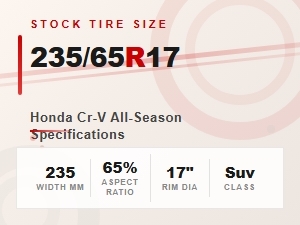 Honda Cr-V Stock Tire Size and Specs – Replacement Options Guide
 Best All-Season Tires for 2005 Honda Cr-V Original Size