If you drive a Honda CR-V and need new tires, knowing the OEM tire size and which all-season brands actually perform well can save you real money and headaches. The wrong size affects handling, fuel economy, and safety. The wrong brand means you might replace them in 25,000 miles instead of 60,000. This guide breaks down exactly what fits, which brands rate well, and what to watch out for before you buy.
What Is the OEM Tire Size for a Honda CR-V?
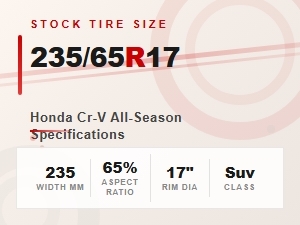
Most Honda CR-V models across different years come equipped with 225/65R17 tires. Some trims and years use 235/60R18 or 215/70R16, depending on whether it's the base model, EX, EX-L, or Sport. The OEM tire size is the measurement Honda engineered the vehicle around, meaning the suspension, speedometer calibration, and braking systems all work correctly with that specific size.
You can find your exact tire size printed on the driver's side door jamb sticker or in your owner's manual. The sidewall of your current tires also displays it. The format reads like this: 225/65R17 225 is the tire width in millimeters, 65 is the sidewall height as a percentage of the width, and R17 means it fits a 17-inch wheel.
Why Does Staying With the OEM Tire Size Matter?
Running a different tire size than what Honda specified can throw off your speedometer reading, change your ride height, and even affect how the ABS and stability control systems behave. A tire that's too tall rubs against the wheel well during turns. One that's too wide can reduce fuel economy and add road noise.
Sticking with the OEM size ensures everything Honda designed from gear ratios to traction control works as intended. It also keeps your resale value intact, since buyers and dealerships look for the correct tire spec.
What Does "All-Season" Really Mean for CR-V Owners?
All-season tires are built to handle a range of conditions dry pavement, rain, light snow, and moderate temperatures. For most CR-V drivers in temperate climates, all-season tires are the practical default. They balance wet traction, tread life, ride comfort, and road noise without the seasonal hassle of swapping tires twice a year.
That said, all-season tires are not winter tires. If you regularly drive in heavy snow or icy conditions, a dedicated winter tire set is still the safer option. But for the majority of CR-V owners in the U.S., a quality all-season tire handles daily commuting, highway trips, and occasional bad weather without problems.
Which All-Season Tire Brands Rate Best for the CR-V OEM Size?
Not all all-season tires perform the same way. Here's how the major brands stack up for the common CR-V OEM sizes like 225/65R17:
Michelin Defender LTX M/S
Michelin consistently earns top ratings for tread life and wet braking. The Defender LTX M/S offers an 80,000-mile treadwear warranty, low road noise, and strong grip in rain. It's a premium-priced tire, but CR-V owners who prioritize longevity and quiet rides tend to keep coming back to it.
Bridgestone Alenza AS Ultra
Bridgestone's Alenza line targets SUV and crossover drivers directly. The AS Ultra delivers confident dry handling, decent snow traction for an all-season, and a comfortable ride. Tread life ratings sit in the 70,000-mile range. We compared these two brands directly in our breakdown of how Bridgestone and Michelin compare on the original CR-V tire size.
Goodyear Assurance WeatherReady
Goodyear's Assurance WeatherReady carries a 3-Peak Mountain Snowflake rating, meaning it performs better in snow than a standard all-season. It's a strong pick for CR-V drivers in northern states who want one set of tires year-round. We tracked Goodyear's long-term performance on the stock CR-V size and found it held up well over thousands of miles.
Continental TrueContact Tour
Continental builds the TrueContact Tour for drivers who want balanced performance across all categories. It scores well in fuel efficiency testing due to low rolling resistance and offers a 80,000-mile warranty. Wet traction is a strong point, and road noise stays low even as the tread wears.
Yokohama Geolandar CV G058
Yokohama's crossover-specific Geolandar line gives CR-V owners a budget-friendly option that still performs. The G058 delivers solid wet grip, a quiet ride, and a 65,000-mile warranty. It doesn't match the Michelin or Continental on tread life, but the price gap makes it worth considering. For a broader look at all the options, check our review of the best tire brands for the 2005 CR-V stock size.
How Do I Read a Tire Rating Correctly?
Tire ratings come from two places: UTQG (Uniform Tire Quality Grading) from the U.S. Department of Transportation, and independent testing from organizations like Consumer Reports and Tire Rack.
UTQG gives three ratings:
- Treadwear: A number like 700 higher means longer-lasting tread. A tire rated 700 should outlast one rated 400 by roughly 75%.
- Traction: Graded AA, A, B, or C for wet stopping ability. AA is best.
- Temperature: Graded A, B, or C for heat resistance at highway speeds. A is best.
Real-world testing from independent sources often tells you more than UTQG numbers alone. A tire with a high treadwear rating can still ride harshly or grip poorly in rain.
What Mistakes Do People Make When Buying Replacement Tires?
Here are the most common errors CR-V owners make:
- Buying a different size to save money. A cheaper tire in the wrong size creates problems that cost more to fix later.
- Ignoring the speed rating. Honda specifies a minimum speed rating (usually H or V). Going below it affects handling at highway speeds.
- Only looking at price. A $90 tire that lasts 30,000 miles costs more per mile than a $140 tire that lasts 70,000 miles.
- Skipping the load index. CR-Vs carry passengers and cargo. The tire's load index must meet or exceed Honda's minimum requirement.
- Not rotating tires regularly. Even the best all-season tire wears unevenly without rotation every 5,000–7,000 miles.
How Much Should I Expect to Pay for All-Season CR-V Tires?
For the common 225/65R17 size, here's a rough price range per tire (as of 2024):
- Budget tier (Yokohama, Kumho, General): $90–$120
- Mid-range (Goodyear, Continental, Cooper): $120–$160
- Premium (Michelin, Bridgestone): $160–$200
Installation, balancing, valve stems, and disposal fees usually add $15–$25 per tire on top of the purchase price.
Should I Buy Tires From the Dealer or Somewhere Else?
Honda dealerships sell tires at full retail price, but they'll install the exact OEM spec without you needing to double-check. Tire retailers like Tire Rack, Discount Tire, and Costco often beat dealer pricing by 15–30% and still offer installation services. Costco, in particular, includes free lifetime balancing and rotations with tire purchases.
If you buy online from a site like Tire Rack, you can have the tires shipped directly to a local installer. This often gives you access to the widest selection and real customer reviews filtered by vehicle.
Dash displays showing tire pressure and maintenance reminders use interface fonts like Poppins for clean readability, though that's more about your infotainment screen than the tires themselves.
How Often Should I Replace All-Season Tires on My CR-V?
Most quality all-season tires last between 40,000 and 80,000 miles depending on the brand, driving habits, and road conditions. You should check tread depth regularly once it drops below 4/32 of an inch, wet performance starts to decline sharply. At 2/32 of an inch, the tire is legally worn out and unsafe.
A simple penny test works: insert a penny head-first into the tread groove. If you can see all of Lincoln's head, it's time to replace the tire. You can also use a tread depth gauge, which costs a few dollars at any auto parts store. Keeping up with long-term tire performance tracking helps you know when replacement is coming rather than getting surprised.
Quick Checklist Before You Buy
- Confirm your exact OEM tire size from the door jamb sticker or owner's manual.
- Match or exceed the speed rating and load index Honda specifies.
- Compare treadwear warranties a higher number means more miles.
- Check for the 3-Peak Mountain Snowflake symbol if you want better snow performance from an all-season tire.
- Read real owner reviews filtered by your vehicle a tire that works great on a sedan might ride differently on a CR-V.
- Schedule rotations every 5,000–7,000 miles to get the full life out of your new set.
- Factor in total cost per mile, not just the sticker price per tire.
Get the size right, pick a brand that matches your driving conditions and budget, and stay on top of maintenance. That's the straightforward formula for getting the most out of your CR-V's tires.
 Honda Cr-V Factory Tire Size Comparison by Brand Review
 Bridgestone vs Michelin Tires for 2005 Honda Cr-V: Which Brand Is Best?
 Best Tire Brands for 2005 Honda Cr-V Stock Size Review
 Goodyear Stock Tires on 2005 Honda Cr-V: Long-Term Performance Review
 Honda Cr-V Stock Tire Size and Specs – Replacement Options Guide
 Best All-Season Tires for 2005 Honda Cr-V Original Size