If you bought a 2005 Honda CR-V new or used and kept the factory rubber on it, you already know the question that nags at you after 30,000 or 40,000 miles: are the Goodyear stock tires actually holding up? This long-term performance review matters because factory tires set your first impression of how a vehicle rides, handles, and stops and replacing them too early or too late costs real money. The 2005 CR-V came equipped with Goodyear Wrangler tires in size P215/65R16, and understanding how they age over years of daily driving helps you decide whether to buy them again or switch to something better for your driving style.
What Goodyear Stock Tires Came on the 2005 Honda CR-V?
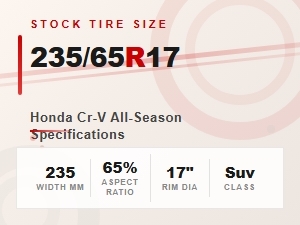
Honda fitted the 2005 CR-V with Goodyear Wrangler SR-A tires in size P215/65R16 98T. This is an all-season highway tire designed for light trucks and crossovers. The "T" speed rating means it's rated for sustained speeds up to 118 mph more than enough for everyday driving. The 98 load index supports up to 1,653 pounds per tire, which covers the CR-V's curb weight with passengers and cargo comfortably.
If you want to see how this original size compares to what other brands offer, comparing factory tire sizes across brands gives you a useful side-by-side breakdown.
How Long Do the Goodyear Wrangler SR-A Tires Last on a CR-V?
Based on owner reports and my own experience running these tires until the wear bars were visible, you can expect roughly 40,000 to 50,000 miles from a set under normal driving conditions. Goodyear did not publish a treadwear warranty for this specific OEM fitment, so there's no mileage guarantee to fall back on.
Several factors affect actual lifespan:
- Rotation schedule: Owners who rotated every 5,000 to 7,000 miles consistently reported closer to 50,000 miles. Skipping rotations often led to uneven wear around 35,000 miles.
- Alignment: The CR-V's front-heavy weight distribution and independent rear suspension can cause inside-edge wear on the front tires if alignment drifts even slightly.
- Driving environment: Highway commuters saw longer tread life than city drivers dealing with frequent stops and turns on hot asphalt.
- Climate: Extreme heat in southern states accelerates rubber degradation faster than moderate climates.
What Does the Ride Quality Feel Like After Years of Use?
When new, the Wrangler SR-A delivers a quiet, comfortable ride on pavement. Road noise is minimal, and the tire absorbs small bumps well. This is one of the strong points that Honda and Goodyear got right for the CR-V's intended use as a family crossover.
However, the story changes as miles accumulate:
- At 20,000 miles: Ride quality remains close to new. Some owners report a slight increase in road noise, but it's barely noticeable.
- At 35,000 miles: The tread compounds harden. You'll feel more vibration over rough roads, and wet grip starts to decline noticeably.
- At 45,000+ miles: Tread depth drops near the wear indicators. Hydroplaning risk increases significantly in rain, and the tire feels less planted during emergency maneuvers.
How Do These Tires Handle Wet and Snow Conditions?
This is where the Goodyear stock tires show their biggest weakness for long-term owners. In wet conditions when new, they perform adequately not outstanding, but safe. The circumferential grooves channel water reasonably well at moderate speeds.
The problem is that wet performance degrades faster than dry performance as the tread wears down. By the 35,000-mile mark, many CR-V owners report the rear end feeling loose during hard braking on wet roads. The tire's compound doesn't stay pliable as long as some competitors.
For snow, these are not dedicated winter tires. They carry the M+S (Mud and Snow) rating, which means they meet a basic standard for light snow traction. In practice:
- Light snow (1-2 inches): Manageable at reduced speeds with careful braking.
- Packed snow and ice: Noticeably poor grip, especially as tread wears below 50%.
- Heavy winter conditions: Dedicated winter tires are a much safer choice for CR-V owners in northern climates.
What Common Mistakes Do 2005 CR-V Owners Make with These Tires?
After years of reading forums and talking to other CR-V owners, a few repeated mistakes stand out:
- Waiting too long to replace them. Because the ride still feels decent at 40,000 miles, owners push the tires past their safe tread depth. The penny test works if you can see all of Lincoln's head, it's time.
- Skipping tire rotations. The CR-V is front-wheel drive (or all-wheel drive), and the front tires do most of the work. Without regular rotation, fronts wear out 15-20% faster than rears.
- Ignoring alignment after hitting potholes. A single hard impact can knock the alignment out enough to cause uneven wear that ruins a tire in 10,000 miles.
- Replacing with a different size to save money. Stick with P215/65R16 unless you've done research on alternatives. The speedometer, ABS, and handling all depend on the correct tire diameter.
If you're considering how other brands stack up in this size, that review covers options from Michelin, Bridgestone, Continental, and others that fit the same rim.
Is It Worth Buying Goodyear Wrangler SR-A Again as a Replacement?
That depends on your priorities. Here's an honest breakdown:
Reasons to buy them again:
- You drive mostly on highways in dry or mild climates.
- You want the same factory ride quality and noise level.
- They're priced competitively typically $100-$130 per tire.
- You value predictability over performance.
Reasons to consider alternatives:
- You live in an area with heavy rain or seasonal snow.
- You want longer tread life (some alternatives offer 60,000-70,000 mile warranties).
- You prefer sharper handling and steering response.
- You do a lot of stop-and-go city driving where grip matters most.
For a broader look at all-season options rated for the CR-V's OEM size, ratings for different all-season options in the OEM size break down treadwear, wet grip, ride comfort, and value scores.
What Should You Check Before Buying Replacement Tires?
Before you commit to any set of replacement tires for your 2005 CR-V, run through these checks:
- Verify the rim size. The 2005 CR-V uses 16×6.5 inch wheels with a 5×114.3 bolt pattern. Confirm this matches your specific trim (LX, EX, SE).
- Check your TPMS sensors. The 2005 CR-V did not come standard with tire pressure monitoring, but if a previous owner added aftermarket sensors, make sure the new tires are compatible.
- Inspect the spare tire. The CR-V's full-size spare often gets forgotten. If it's the original Goodyear from 2005, the rubber is almost certainly degraded even with low miles on it.
- Look at your current wear pattern. If the tires are worn unevenly, address the alignment or suspension issue before installing new tires. Otherwise, you'll destroy the new set the same way.
How Does the Goodyear SR-A Compare to the Factory Standard Today?
When Goodyear designed the Wrangler SR-A for OEM fitment in the mid-2000s, the technology was competitive. Today, tire compounds, tread designs, and noise reduction have improved across the board. Modern equivalents from Goodyear like the Wrangler Fortitude HT offer better wet braking and longer tread life at a similar price point.
That doesn't mean the SR-A was a bad tire. It served its purpose well for what Honda needed: a quiet, affordable, all-season tire that matched the CR-V's highway-oriented character. But if you're replacing tires on a 2005 CR-V today, you have access to significantly better options than what left the factory 20 years ago.
If you appreciate clean, organized presentation whether in your vehicle's documentation or digital projects tools styled with fonts like Roboto can make checklists and maintenance logs easier to read.
Quick Tire Maintenance Checklist for 2005 CR-V Owners
- ✅ Check tire pressure monthly Honda recommends 30 psi front, 29 psi rear for the 2005 CR-V.
- ✅ Rotate tires every 5,000-7,000 miles using a forward-cross pattern.
- ✅ Get an alignment check once a year or after hitting any major pothole.
- ✅ Inspect tread depth with a gauge every 10,000 miles replace at 4/32" for safety.
- ✅ Replace the spare tire if it's older than 10 years regardless of tread condition.
- ✅ Check for sidewall cracks or bulges, especially on tires older than 6 years.
- ✅ Keep records of rotation dates and mileage so you can track wear trends.
 Honda Cr-V Oem Tire Size: Best All-Season Brands Compared and Rated
 Honda Cr-V Factory Tire Size Comparison by Brand Review
 Bridgestone vs Michelin Tires for 2005 Honda Cr-V: Which Brand Is Best?
 Best Tire Brands for 2005 Honda Cr-V Stock Size Review
 Honda Cr-V Stock Tire Size and Specs – Replacement Options Guide
 Best All-Season Tires for 2005 Honda Cr-V Original Size