Upgrading the tire size on your Honda CR-V can make a real difference in how the vehicle handles, grips the road, and feels during daily driving. Whether you want sharper cornering, better wet traction, or a more planted ride on the highway, choosing the right tire size upgrade is one of the most effective changes you can make without touching the engine. This guide breaks down your options clearly so you can pick the best fit for your driving needs and your specific CR-V generation.
What does upgrading tire size actually mean for a Honda CR-V?
Upgrading tire size usually means going with a wider tread, a lower aspect ratio sidewall, or both. The stock Honda CR-V tires are designed for comfort and fuel economy. That's great for commuting, but if you want more grip in corners or shorter stopping distances, a slightly wider or performance-oriented tire can help. The key is staying within a range that doesn't interfere with the wheel wells, suspension, or speedometer accuracy.
For example, a 2020 CR-V comes standard with 235/65R17 tires. A common upgrade path might move to 245/65R17 or 235/60R18 with a new wheel. Each change has trade-offs in ride quality, noise, and fuel economy. Understanding these trade-offs before you buy saves money and frustration.
Why would someone upgrade their CR-V tires for performance?
Most CR-V owners start looking at tire upgrades for one of these reasons:
- Better wet and dry grip Wider tires or stickier compounds give more contact with the road.
- Improved cornering stability A lower-profile tire reduces sidewall flex during turns.
- Shorter braking distances Performance-oriented tires can stop noticeably faster.
- A more confident highway feel Less wandering, less road noise, and more responsive steering.
- Visual upgrade Larger wheels with lower-profile tires give the CR-V a sportier stance.
These upgrades are especially popular with owners who drive mountain roads, deal with heavy rain, or simply want their CR-V to feel less like a basic crossover and more like a confident driver's vehicle.
What are the most popular tire size upgrades for different CR-V generations?
2002–2006 CR-V (2nd generation)
Stock size is typically 205/70R15 or 215/65R16. A popular upgrade moves to 225/70R16 for a wider contact patch without major rubbing issues. Owners of this generation also explore all-season tire options for the original size before deciding whether to go bigger.
2007–2011 CR-V (3rd generation)
These usually come with 225/65R17 tires. Upgrading to 235/65R17 adds roughly 10mm of tread width, which noticeably improves grip without requiring a wheel change. Some owners go to 245/65R17, though that's closer to the limit of what fits without minor rubbing at full lock.
2012–2016 CR-V (4th generation)
Stock is 225/65R17 or 225/60R18 depending on trim. The 235/60R18 size is a common upgrade that adds width while keeping the overall diameter close to stock. This preserves speedometer accuracy and doesn't stress the drivetrain.
2017–2022 CR-V (5th generation)
Most trims run 235/65R17 or 235/55R19. Owners looking for better performance often choose 245/65R17 for the 17-inch setup or 245/50R19 for the 19-inch wheels. The wider footprint gives a meaningful traction boost, especially in rain and light snow.
2023+ CR-V (6th generation)
The newest CR-V uses 235/60R18 or 235/55R19 depending on trim level. Upgrading to 245/55R18 or 245/50R19 provides a wider contact area. Because this generation has a slightly revised suspension geometry, sticking close to the stock overall diameter is important to avoid sensor or handling issues.
For a detailed comparison of stock versus wider tires, check out our breakdown of stock tire size versus wider tire options.
How do I choose between going wider or changing the aspect ratio?
This is one of the most common questions CR-V owners ask, and the answer depends on what you want to improve.
- Going wider (e.g., 235 to 245) adds grip in a straight line and in corners. It's the simplest upgrade and usually the safest bet for better performance.
- Lowering the aspect ratio (e.g., 65 to 60 series) reduces sidewall height. This sharpens steering response but makes the ride firmer over bumps and potholes.
- Combining both gives the most dramatic change, but also the most risk of rubbing, speedometer error, and ride quality loss.
A good rule of thumb: never change the overall tire diameter by more than 3% from stock. Use an online tire size calculator to check this before buying. Staying within 2% is even safer and keeps your speedometer and odometer accurate.
What common mistakes do people make when upgrading CR-V tires?
I've seen these errors cost CR-V owners hundreds of dollars and weeks of frustration:
- Going too wide A 265-series tire on a stock CR-V wheel will rub the inner fender liner. It might look aggressive, but you'll hear it every time you turn.
- Ignoring load rating The CR-V is heavier than it looks, especially with passengers and cargo. Make sure your new tires carry the same or higher load index as the originals.
- Skipping the speed rating check Most CR-Vs come with H-rated (130 mph) or V-rated (149 mph) tires. Dropping below this rating can affect handling at highway speeds.
- Not replacing all four tires at once Mixing old and new tires, especially with different sizes, confuses the AWD system and can cause uneven wear or drivetrain stress.
- Forgetting about the spare If you upgrade tire size, your spare tire may no longer match. Some owners carry a full-size matching spare for road trips.
Do I need new wheels if I change tire size?
Not always. If you're only going slightly wider (10mm more tread width), the stock wheels usually work fine. The wheel width specification matters here. A 7-inch-wide wheel can typically handle tires from 215 to 245mm wide without problems. But if you want to go to 245 or wider with a lower aspect ratio, you might benefit from an 8-inch-wide wheel for proper tire bead seating and sidewall support.
Switching to a larger diameter wheel (17 to 18, or 18 to 19) always requires new tires and possibly new TPMS sensors. Factor that into your budget.
What tire brands perform best for a CR-V performance upgrade?
Based on owner feedback and testing data, these are the tire models CR-V owners consistently recommend for a performance-focused upgrade:
- Michelin Defender LTX M/S 2 Excellent all-around performer with long tread life and strong wet grip.
- Continental CrossContact LX25 Quiet, responsive, and good in rain. A strong choice for daily drivers.
- General Grabber HTS60 Budget-friendly with surprisingly good grip and durability.
- Pirelli Scorpion AS Plus 3 Sportier feel with good wet performance. Slightly firmer ride.
- Yokohama Geolandar CV G058 Great balance of comfort and performance for crossover SUVs.
You can explore more about CR-V tire size upgrade paths in our detailed replacement options guide.
Will upgrading tire size affect my CR-V's fuel economy?
Yes, but usually not by much. A wider tire creates more rolling resistance and adds a small amount of weight. Most CR-V owners report a drop of 0.5 to 1.5 MPG after going from a 225 to a 245 width. If fuel economy is your top priority, a stickier compound in the stock size may be a better option than going wider.
Tire pressure also plays a role. After any tire size change, check the door placard for recommended PSI and adjust slightly if needed. Running the new tires at the correct pressure minimizes the fuel economy penalty.
How much does a tire size upgrade cost for a Honda CR-V?
Here's a rough breakdown for a set of four tires:
- Budget all-season in stock size: $400–$550 for a set of four
- Mid-range performance all-season, one size wider: $550–$800
- Premium performance tire, wider with new wheels: $1,200–$2,000+
- Mounting, balancing, and alignment: $100–$200 on top of tire cost
Always get a four-wheel alignment after changing tire sizes. It protects your investment and ensures even wear from the start. For styling and typography inspiration on any DIY project documentation, you might explore fonts like Montserrat for clean, readable formatting.
What should I check before buying upgraded tires?
- Confirm your wheel size Look at the sidewall of your current tires or check the driver's door placard.
- Calculate the overall diameter Use a tire size calculator to make sure the new size stays within 3% of stock.
- Verify load index and speed rating Match or exceed the original specifications.
- Check clearance Turn the steering wheel to full lock both directions and check for rubbing.
- Read owner reviews for your specific CR-V year What works on a 2019 may not fit a 2014.
- Budget for alignment Skip this step and you'll wear through new tires fast.
Quick tip: Before committing to a size upgrade, visit a tire shop and ask if they have the size you want in stock for a dry fit. Many shops will test-fit a tire on your wheel for free. This 10-minute step can save you from ordering the wrong size and dealing with return shipping. Start by checking your current tire placard, comparing it against the upgrade sizes listed above for your CR-V generation, and getting a quote from at least two local shops before buying.
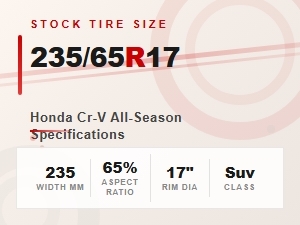 Honda Cr-V Stock Tire Size and Specs – Replacement Options Guide
 Best All-Season Tires for 2005 Honda Cr-V Original Size
 How to Choose the Right Replacement Tires for Your 2005 Honda Cr-V
 Honda Cr-V Stock Tire Size vs Wider Tire Comparison
 Honda Cr-V Oem Tire Size: Best All-Season Brands Compared and Rated
 Honda Cr-V Factory Tire Size Comparison by Brand Review